Is it just me, or…? Everyday food questions, a little science, and something useful for dinner.
Why might a large salad leave me hungry?
A salad can look large without providing enough food for your needs. Its ingredients and portion matter more than the label “salad.” Look at the whole meal, including protein sources and substantial sides; research cannot predict exactly how long your lunch will keep you satisfied.
You finish a very respectable bowl of salad. Plenty of leaves. Lovely colors. Maybe you even used the good bowl.
An hour later, you’re looking for something else to eat.
My first question would be: what was in the bowl, and was it enough lunch for you?
“Salad” describes a format. It doesn’t tell us the amount of food energy, protein, or anything else in the meal. A bowl of lettuce and cucumber and a bowl with lentils, potatoes, walnuts, and dressing can look similarly generous. They’re different meals.
Does a big bowl automatically mean a filling meal?
Volume and energy density—the amount of energy in a given weight of food—both matter in appetite research. A study of 42 women tested different portions and energy densities of salad served before pasta. The lower-energy-density salads reduced total energy eaten at that lunch compared with no first course. [1]
Here’s the detail I don’t want to lose: the salad was a first course. Pasta followed it. The study doesn’t tell us that a bowl of leaves alone will keep everyone satisfied through an afternoon.
That’s why I like reading what happened at the table in a study, not just the headline. “Salad helps with fullness” and “this particular salad is enough for my lunch” are different questions.
What about protein?
Protein is one part of the picture. In a small randomized crossover study, 20 late-adolescent girls who usually skipped breakfast tried breakfasts with different protein levels, or continued skipping breakfast. The higher-protein breakfast produced greater daily fullness than the normal-protein breakfast. [2]
Useful evidence, with boundaries. This was a specific group, a breakfast study, and meals containing cereal or eggs and beef. It doesn’t establish an ideal protein number for your salad, or prove how long a plant-based lunch will satisfy you.
I take it as a reason to consider the composition of a meal. I don’t take it as a reason to promise that adding one ingredient will switch hunger off.
How would I build a more substantial salad?
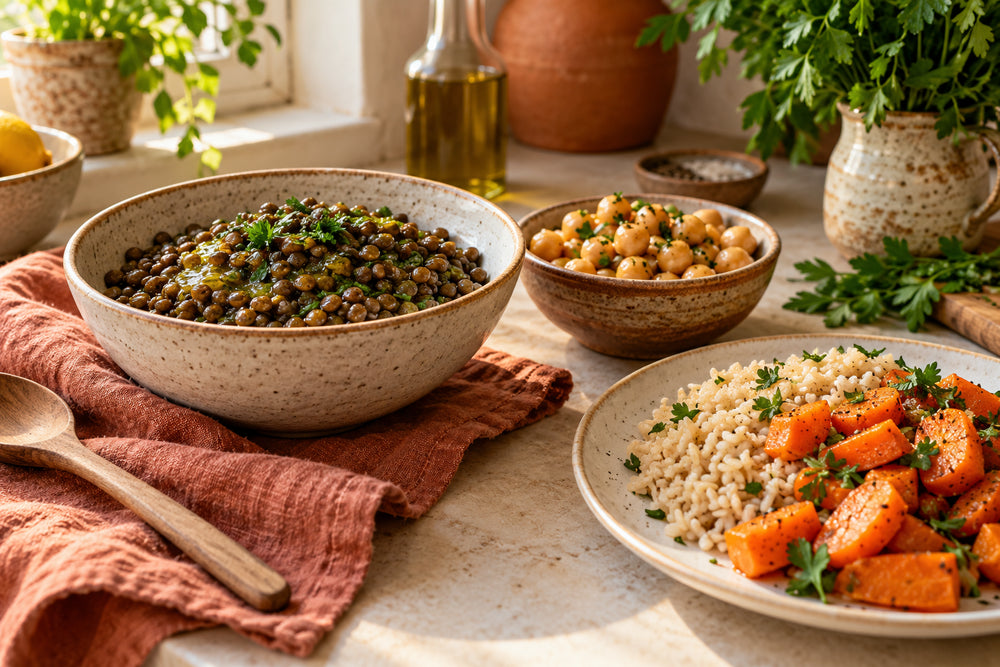
Start with the vegetables you enjoy, then give the bowl some substance. Lentils, beans, or tofu could be a starting point for protein. Add something starchy, such as potatoes, rice, or another grain you like. Finish with a dressing and something that makes the bite interesting.
For flavor, I’d go warm roasted beets, lentils, potatoes, parsley, and a lemon-cumin dressing, with walnuts for crunch. You can adjust the amount of each component to your appetite and dietary needs.
That’s a serving suggestion, not a clinical formula. You don’t have to use every ingredient, and you don’t have to keep the meal cold just because it started life as a salad.
A cooked Roasted Beet & Walnut patty can be another way to start assembling the plate. Follow the pack directions and add sides that make it enough for you. Our patties haven’t been tested for the appetite outcomes discussed above.
What if I’m still hungry?
Have more food. Maybe lunch needed to be bigger, or maybe it’s simply time for a snack.
One hungry afternoon also isn’t enough information to label a meal—or yourself. Try noticing whether the pattern changes when you make lunch more substantial. No need to aim for the longest possible stretch without eating.
And if hunger has changed markedly or comes with other symptoms, it deserves individual medical advice rather than a salad troubleshooting article.
My goal for lunch is fairly simple: something enjoyable that supports the rest of the day. Sometimes that means the salad needs a few more ingredients. Sometimes it means I want a completely different lunch.
What turns a salad into a meal for you?
For fellow rabbit-hole readers
- Rolls, Roe & Meengs (2004): Salad and satiety. Randomized crossover study of first-course salads and lunch intake.
- Leidy et al. (2013): Higher-protein breakfast and appetite signals. Small crossover study in habitual breakfast-skipping late-adolescent girls; not a trial of Hey!Hunger or salad meals.